Introduction to Machine Learning Systems
Machine learning has evolved from a research discipline into an engineering practice. Building systems that learn from data requires more than understanding algorithms—it demands expertise spanning data pipelines, model development, optimization for deployment constraints, and operational practices. This book introduces AI engineering: the discipline of building ML systems that work in the real world. The treatment covers four areas: foundations (system characteristics, development workflows), building (deep learning mathematics, architectures, framework internals), optimization (compression, hardware acceleration, benchmarking), and deployment (serving infrastructure, operations, responsible engineering). The emphasis throughout is on engineering trade-offs and quantitative analysis.
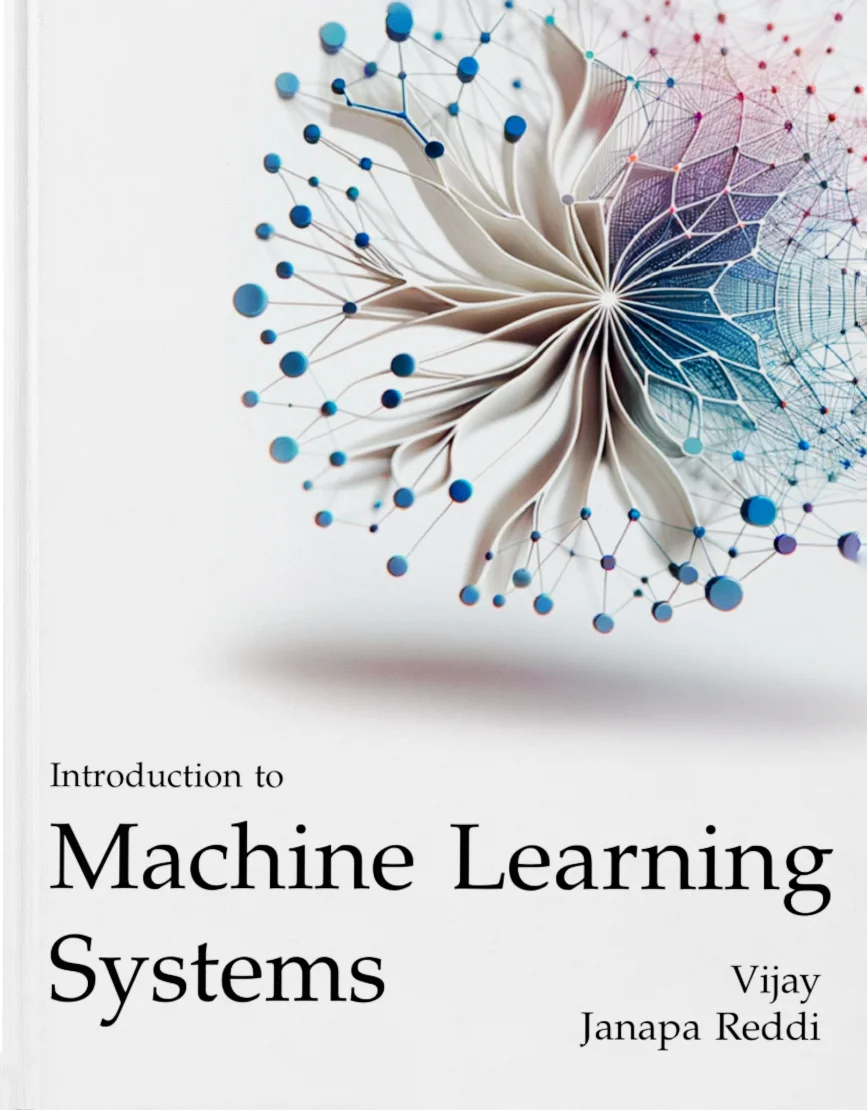
Introduction to Machine Learning Systems
Publisher: The MIT Press (2026)
📖 Click here to download PDF
What You Will Learn
The book progresses through four stages:
- Part I: Foundations—Build your conceptual foundation with mental models that underpin all effective systems work.
- Part II: Build—Engineer complete workflows from data pipelines through training infrastructure.
- Part III: Optimize—Transform theoretical understanding into systems that run efficiently in resource-constrained environments.
- Part IV: Deploy—Navigate serving, operations, and responsible engineering practices.
Prerequisites
This book assumes:
- Programming proficiency in Python with familiarity in NumPy
- Mathematics foundations in linear algebra, calculus, and probability at the undergraduate level
- Prior ML experience is helpful but not required; neural computation provides essential background
Learn by Doing
Beyond the chapters, this volume is the reading spine for a broader AI engineering curriculum. Pair the chapters with Co-Labs to test predictions, TinyTorch to build framework internals, MLSys·im to model hardware constraints, and Hardware Kits to deploy on real devices. Instructors can adopt the full sequence through The AI Engineering Blueprint.
2026 Goal: Help 100,000 students learn ML Systems. Sponsors like the EDGE AI Foundation match every star with funding that supports learning.
Listen to the AI Podcast
This short podcast, created with Google's NotebookLM and inspired by insights from our IEEE education viewpoint paper, offers an accessible overview of the book's key ideas and themes.
Want to Help Out?
The book and curriculum continue to grow as a collaborative project, and your input matters. If you would like to contribute, check out our contribution guidelines. Feedback, corrections, and new ideas are welcome. Simply file a GitHub issue.
Back to top